The German-Austrian self-storage industry gathered in Vienna on 31 August and 1 September 2026 for the Self Storage Branchenforum, the annual conference of the Self Storage Verband (the industry association for Germany and Austria).
This year’s focus theme was artificial intelligence and S4S Nordic joined as one of the event’s main sponsors.
How the two days unfolded
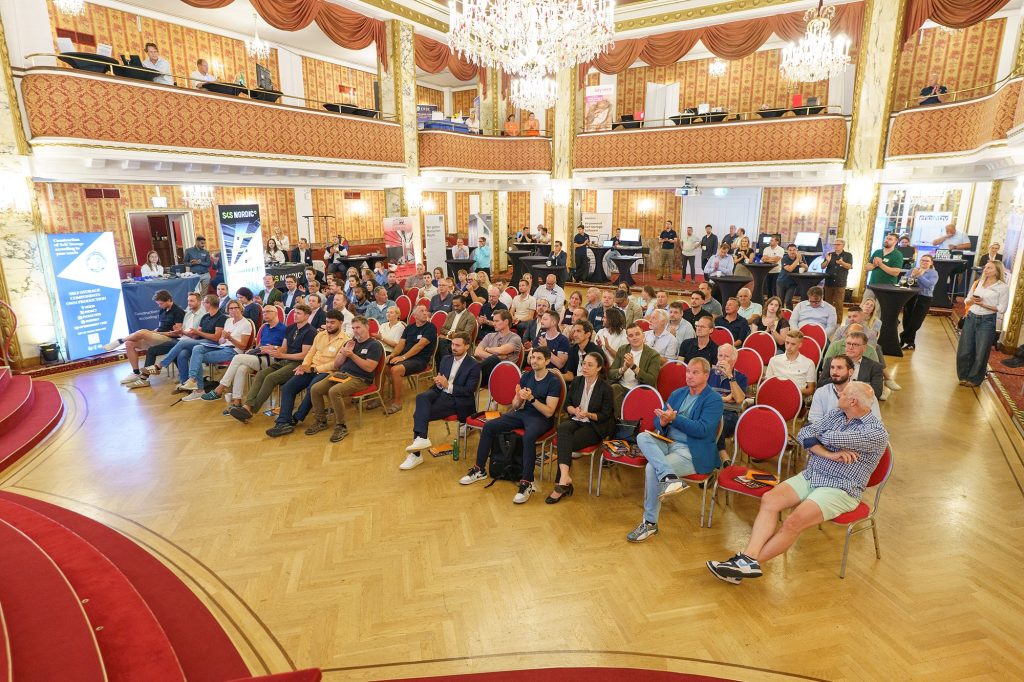
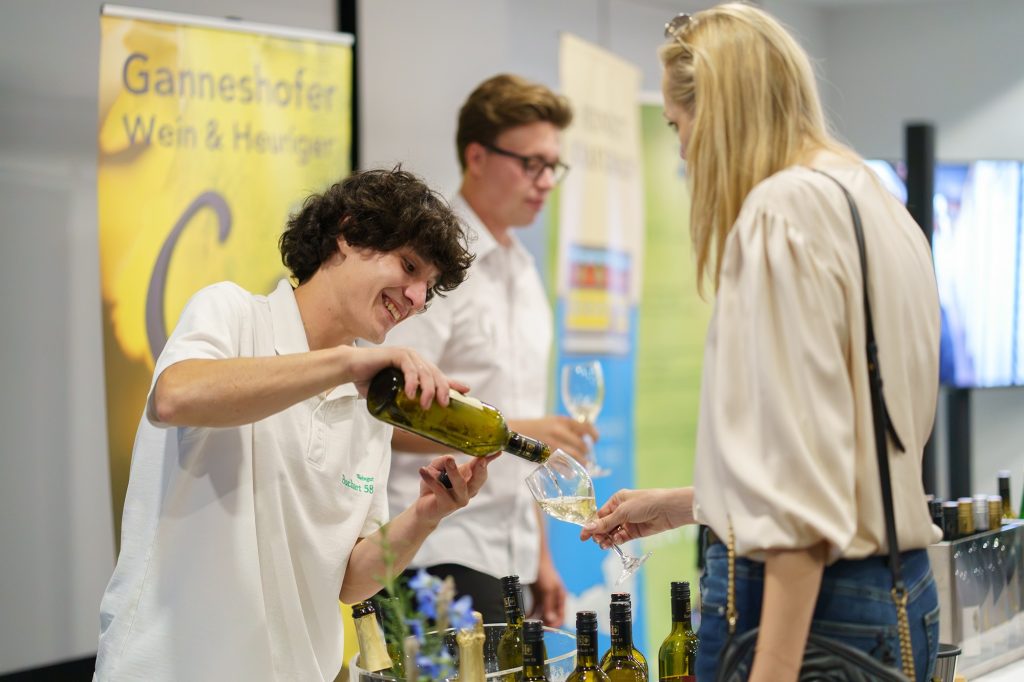
The event opened on Monday evening, 31 August, at Kinnovis headquarters in Brunn am Gebirge, just outside Vienna, with a wine tasting, good food and outstanding classic live music, including a tour of their STORE ROOM facility.
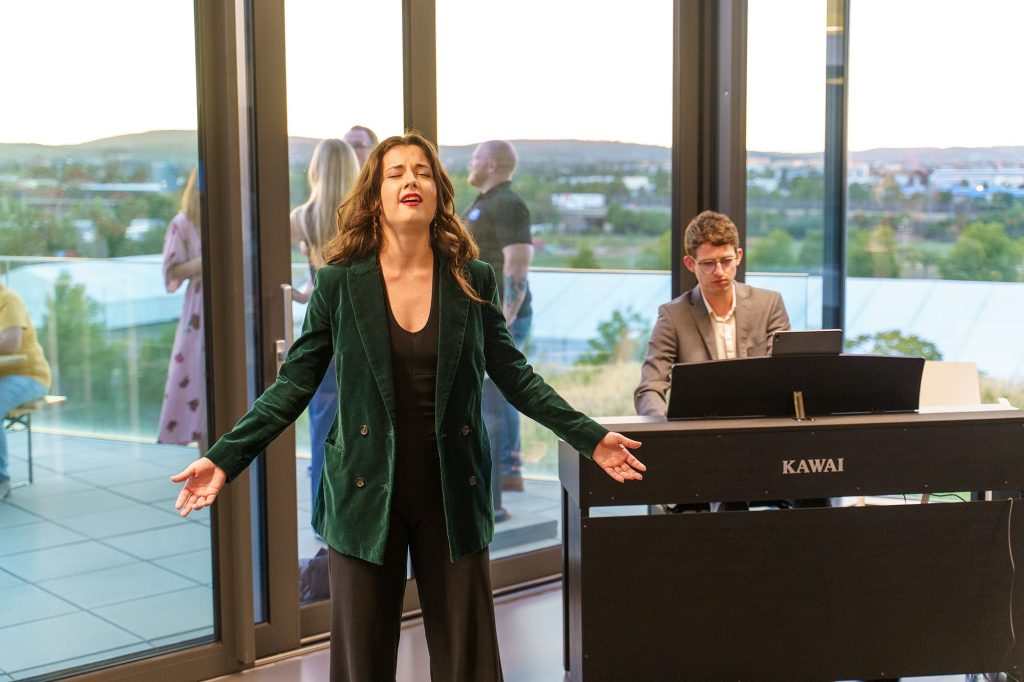
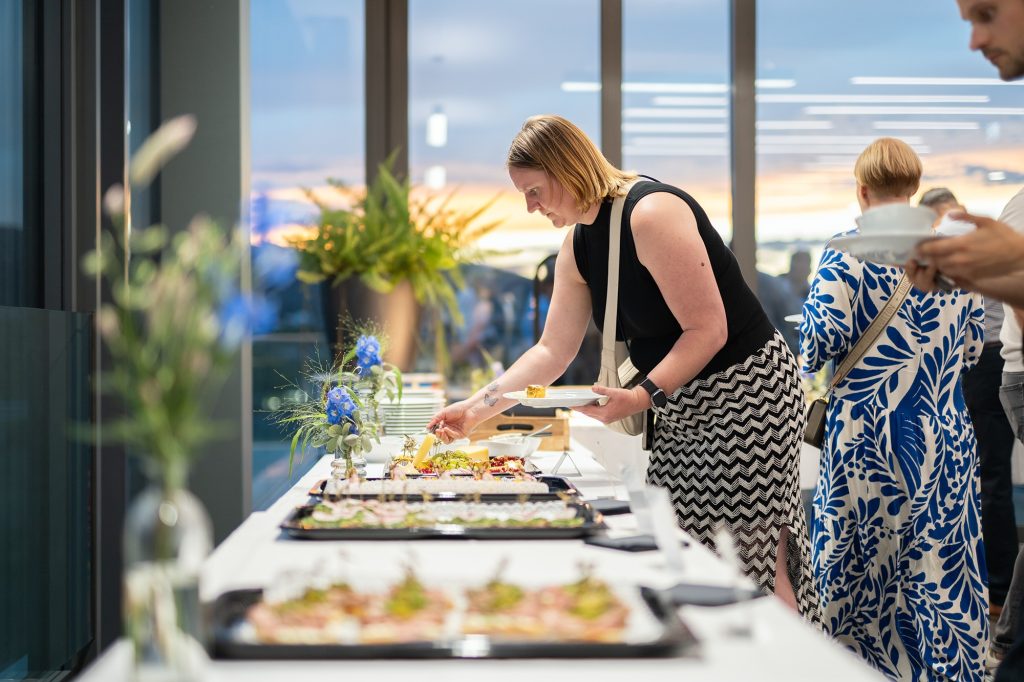
The main conference day began on Tuesday, 1 September, at the Austria Trend Parkhotel Schönbrunn, starting with a facility tour of MyPlace SelfStorage’s Vienna site at Gaudenzdorfer Gürtel.
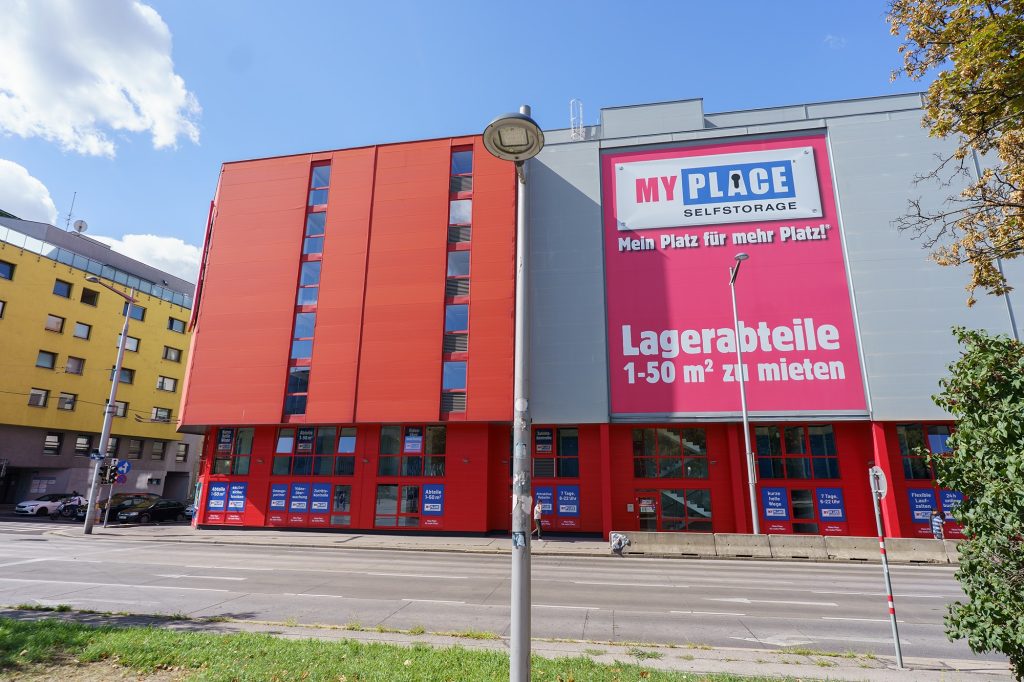
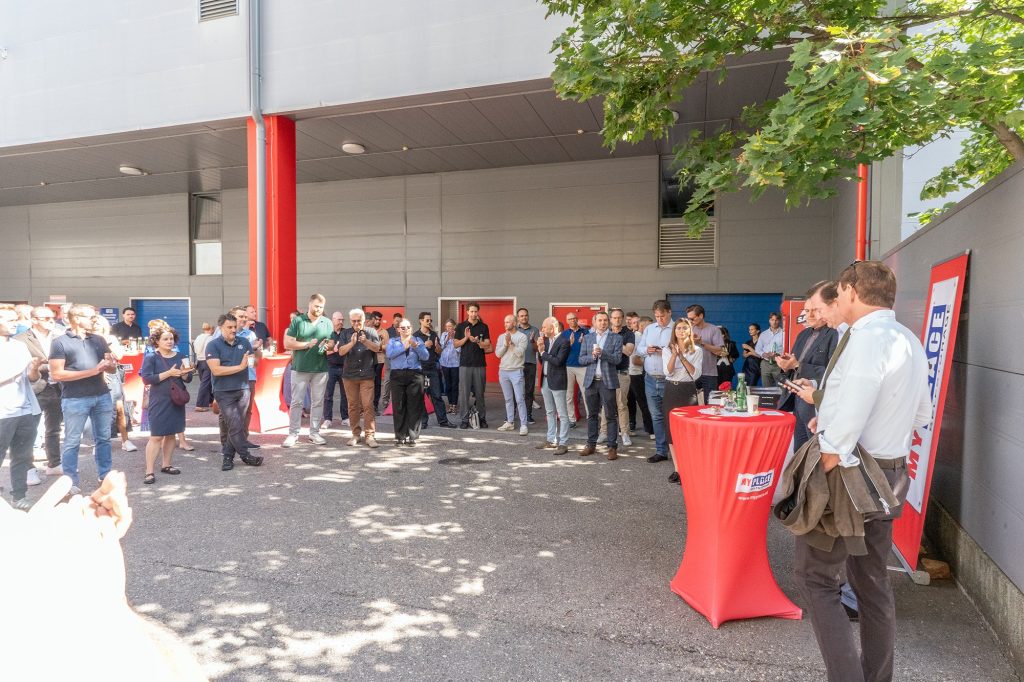
MyPlace is a fitting host: founded in Austria in 1999, the company began with a single facility in Langenzersdorf and has grown into a network of 76 sites across Germany, Austria and Switzerland — around 55,000 storage units across more than 300,000 m², run by a team of 290 employees. Its expansion has followed a deliberate urban-cluster strategy, concentrating in cities where living space is scarce (Berlin, Munich, Hamburg, Frankfurt, Stuttgart, Vienna, Zurich and a further tier of cities including Wiesbaden, where MyPlace has since become something of a meeting point for the industry) rather than operating isolated, disconnected sites. A typical MyPlace location runs around 5,000 m² with 800 to 1,000 units in roughly 70 different sizes, backed by personal access codes, individual locks, 24-hour video surveillance and on-site security — paired with services like storage insurance, packing supplies and arranged removals. The company also reports on its own environmental, social and governance work, including local donation and reuse initiatives, positioning storage as infrastructure for modern urban life rather than just square metres.
After opening remarks from Klaus Müller, chairman of the Self Storage Verband, the programme moved into two keynotes on the day’s central theme: Dr. Masud Afschar (Lead AI & Data Engineer) on moving from AI hype to concrete operational value, followed by lawyer Daniela Birnbauer on the legal framework operators need to consider when deploying AI.
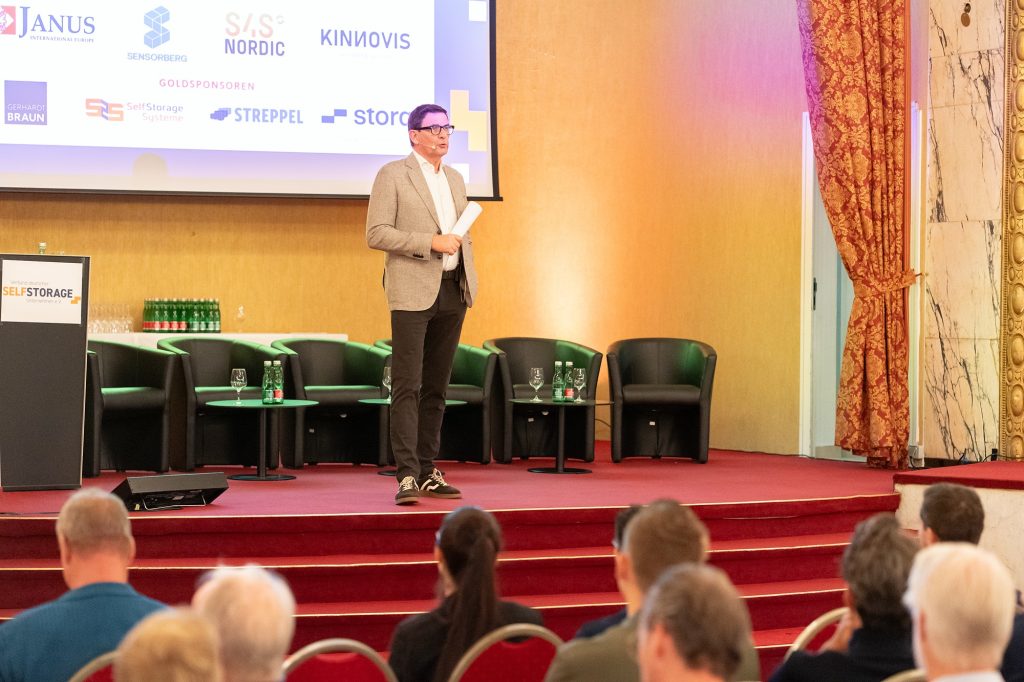
The AI panel
The centrepiece of the afternoon was a panel discussion, “Künstliche Intelligenz im Self Storage,” moderated by Klaus Müller with five panellists: Reza Chand (MyPlace), Janine Krakow (Storemore), Adriana Szutkowska (Janus), Pavel Dobrev (Sensorberg) and Martin Wild (Kinnovis).
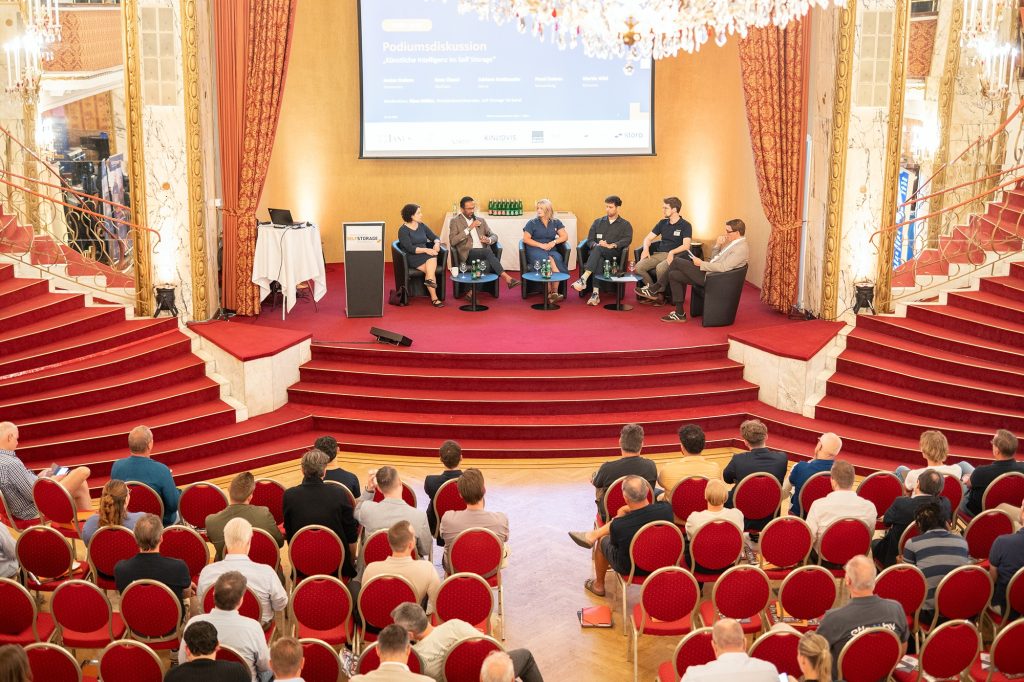
The discussion was framed around a set of prepared themes rather than a fixed script, giving the panel room to follow whichever threads proved most relevant on the day. Topics on the agenda included where AI is already influencing real business decisions today versus where it remains automation dressed up as AI; which decisions operators would hand fully to a system (pricing, unit-size recommendations, lead prioritisation) versus which should always keep a human in the loop; whether access-control and hardware suppliers are evolving into broader digital platforms; and the balance between the efficiency AI offers and the added complexity and attack surface that comes with more connected systems. The panel closed on a forward-looking question: which everyday task in a self-storage business is likely to disappear within five years because of AI.
The Branchenreport 2026: a market that’s growing, but still has to prove itself to the public
The other major moment of the day was the presentation of the Self Storage Branchenreport 2026 by Christian Kulick, Managing Director of the Self Storage Verband, produced jointly with CBRE. As DEAL Magazin reported, this is the third edition of the report and it points to a German market that grew and improved operationally even as the European average slipped. A few of the report’s headline findings:
Germany now counts 1,394 self-storage sites totalling around 2.92 million m² of rentable space, while Austria has 373 sites and roughly 481,000 m². Relative to population, Austria is considerably more densely served — about 2.4 times as many sites per capita as Germany.
Occupancy improved in both markets: from 75.0% to 76.3% in Germany and from 74.0% to a strong 80.5% in Austria (though the Austrian figure rests on a narrower sample of operators). That sits against a European average that actually declined slightly, from 79.5% to 77.6%. Average rental rates rose too — to €302/m²/year in Germany and €328/m²/year in Austria — pushing German revenue per available m² up from €219 to €231.
On the investment side, self-storage’s prime yield stands at 4.75%, positioning it between logistics (4.50%) and light industrial (6.00%), with capital increasingly arriving through debt financing and joint ventures rather than outright acquisitions.
The more striking numbers, though, are on the demand side. Just over half of Germans (52.1%) have never heard of self-storage and 68.4% can’t name a single location near them. Price perception is skewed even further: nearly a third of Germans estimate a 10 m² unit costs under €50 a month, when the real figure implied by the report’s own rental data is roughly six times that. As Klaus Müller put it in the Verband’s own release on the report, this expectation gap directly costs conversions — someone budgeting €50 who’s quoted a realistic price assumes they’re being overcharged, when in reality they’re paying for video surveillance, secured access and full flexibility.
The wider DACH picture
Writing separately in UNLOCKED (Q3 2026), Christian Kulick set this data in a broader context. Germany is the largest market in the region by population and total space, but remains relatively undersupplied on a per-capita basis — the 2025 industry data he cites puts it at around 2.39 million m² across 1,239 sites, or about 0.029 m² per person.
The market is also more varied than outsiders might expect: alongside conventional indoor walk-in facilities concentrated in larger cities, Germany has a substantial number of micro sites and outdoor drive-up formats, both building- and container-based, plus a growing number of mixed-use sites that combine walk-in and drive-up units on the same property to make locations more resilient. Automation — electronic locking, online booking and payment, remote customer service and in some cases AI-supported video monitoring — is becoming a defining trend across operators of every size, though the difference lies less in whether operators automate and more in how: for smaller and mid-sized operators it’s what makes genuine remote management possible at all, while many larger operators combine it with on-site staff at flagship urban facilities.
Austria tells a different story on a per-capita basis: about 346,000 m² across 298 sites, or roughly 0.038 m² per person — slightly above the European average and structurally distinctive within the region. Rather than a few large traditional facilities, Austria leans heavily on micro sites, many of them automated and remotely managed, clustered around Vienna before gradually spreading further across the country. That density of small, visible locations appears to have helped raise public awareness in a way that shows up directly in the Branchenreport’s own consumer survey — but Kulick is careful to note that Austria’s occupancy figures should be read in that context too: a small automated site can fill up faster than a large traditional one, which normally needs some vacancy to offer a full range of unit sizes and optimise pricing.
Growth in either market is far from frictionless. Germany’s roughly 11,000 municipalities each require their own planning approval, ruling out any simple copy-and-paste approach to expansion, while financing for self-storage is still not universally treated as a standard property asset class — new entrants often face the double challenge of proving site-specific demand and explaining the operating model itself. On the trust side, Kulick points to the Verband’s own quality seal as doing real work in a fragmented market with varying storage formats and customer expectations: certified operators are assessed against defined criteria covering customer service, access, security, cleanliness and operational reliability, giving customers, municipalities and investors a clearer sense of what a professional facility is meant to deliver.
Despite the friction, his outlook for both markets is positive. The demand drivers are structural rather than cyclical — changing housing patterns, mobility, renovation, household change and flexible business needs — and operators are becoming more sophisticated across booking, automation and customer communication. His closing point doubles as a caution for anyone eyeing the region from outside: models from other self-storage markets can’t simply be copied into Germany or Austria. Success depends on local knowledge — planning, patience, realistic lease-up assumptions and a format matched to local demand.
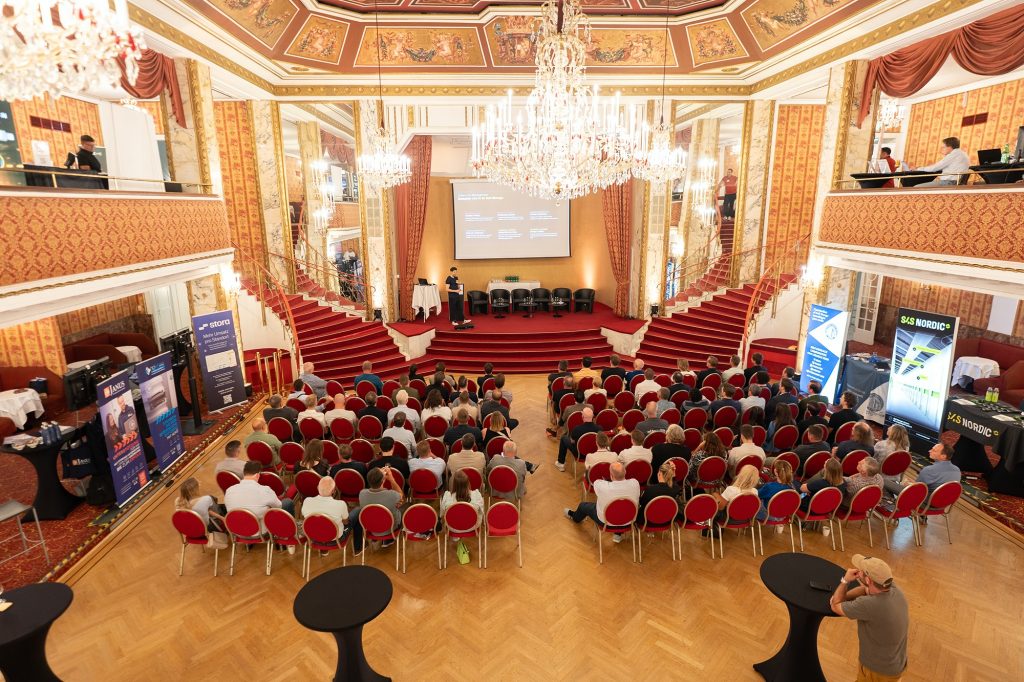
S4S Nordic at the Branchenforum
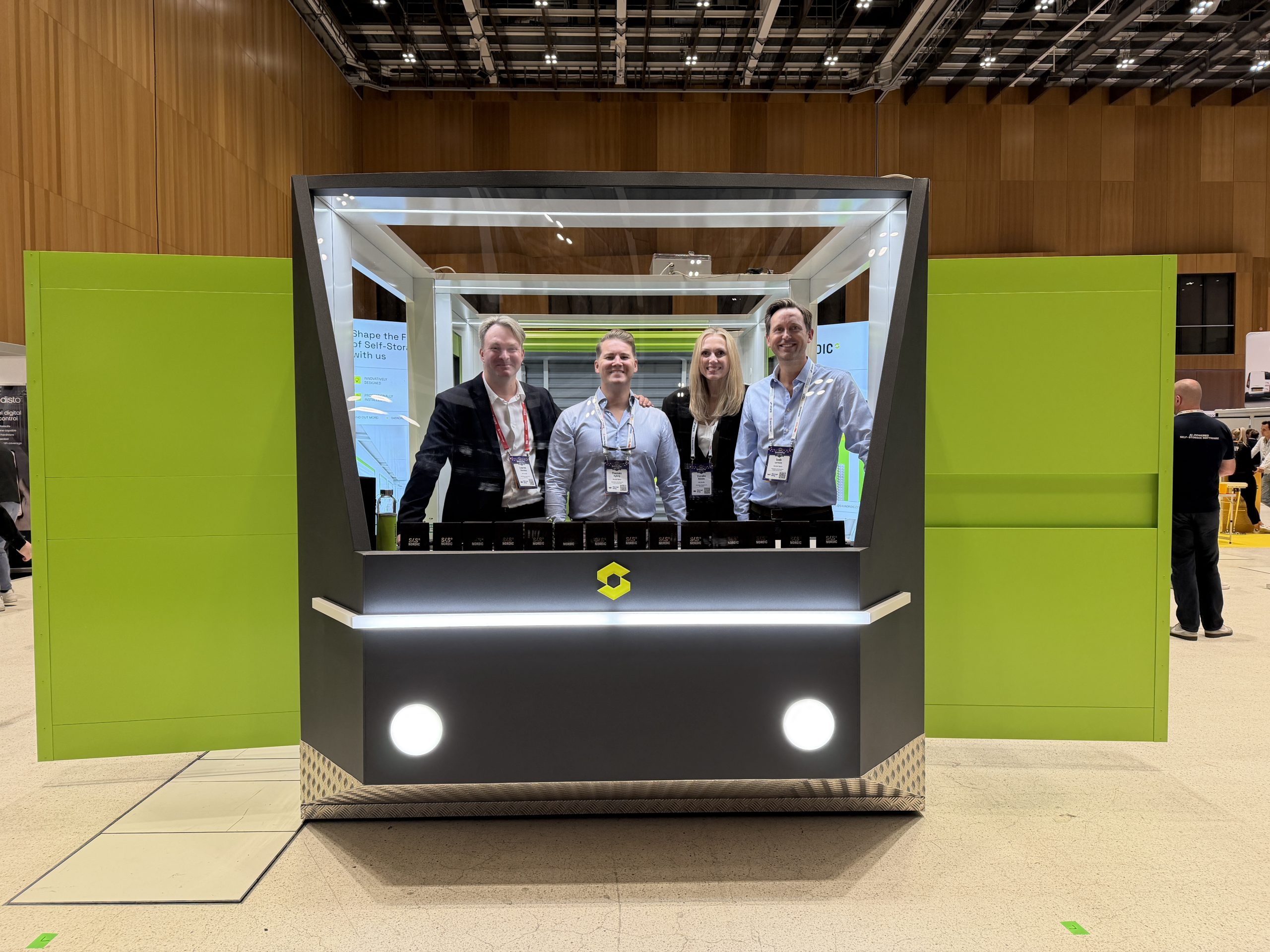
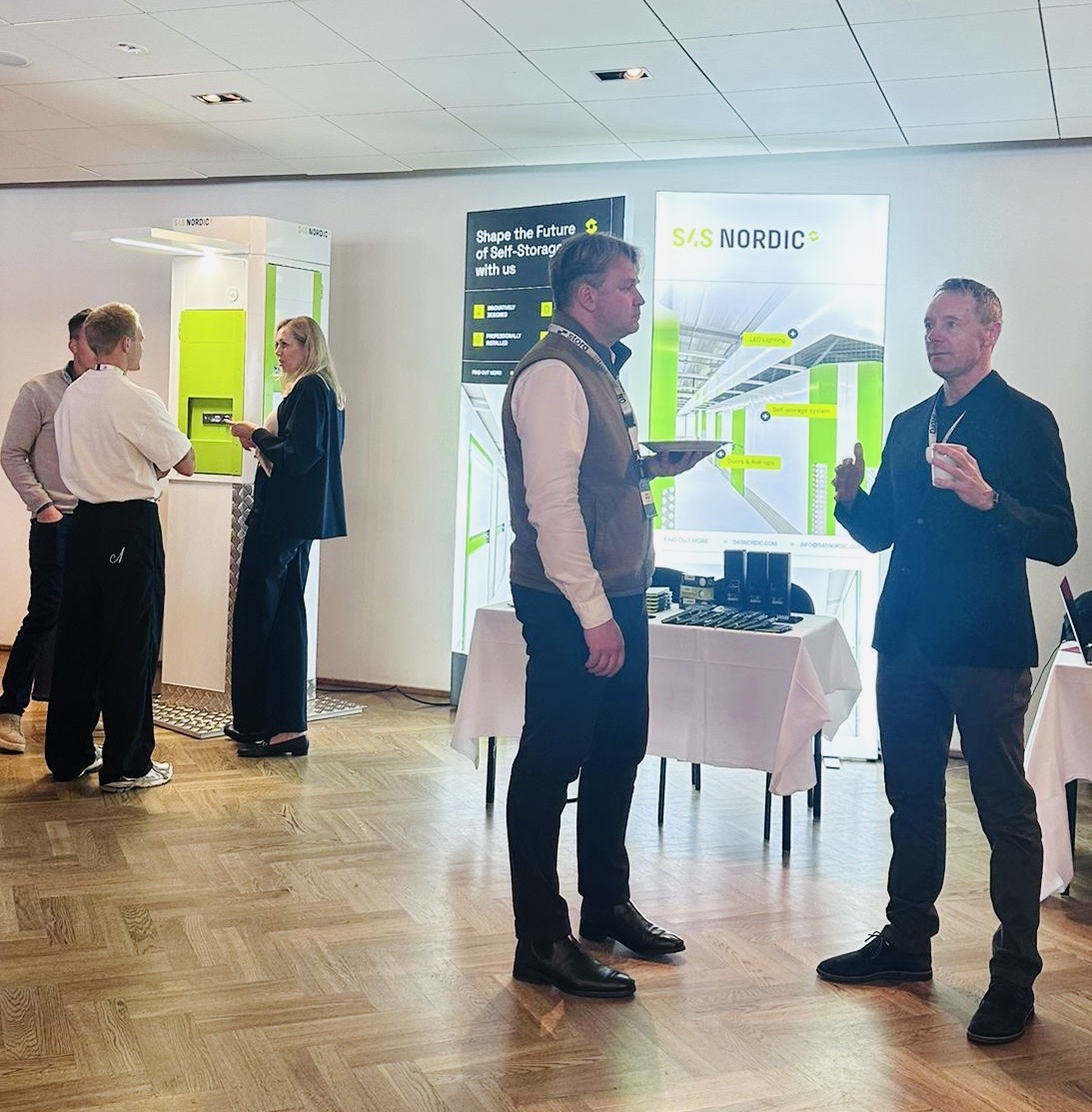
S4S Nordic joined this year’s Branchenforum as one of the event’s main sponsors, alongside Janus, Sensorberg and Kinnovis. It’s a natural room to be in: several of the companies on stage and on the exhibition floor — Sensorberg among them — are partners we already work with directly on smart access and digital operations and the Branchenreport’s own findings on automation and digital adoption track closely with what we’re seeing across our own projects in the Nordics.
The full Self Storage Branchenreport 2026 is available from the Self Storage Verband.