This is a complete guide for starting a self-storage business. More and more people are living in smaller spaces, e-commerce keeps growing, and with that comes a growing need for somewhere to keep the things that do not fit at home
More and more people are living in smaller spaces, e-commerce keeps growing, and with that comes a growing need for somewhere to keep the things that don’t fit at home. That’s part of why self-storage has become such an attractive business to enter: low staffing costs, predictable rental income, and a concept that scales from a single facility to several. But the road from idea to finished facility has more obstacles than most people expect going in. Here’s what you actually need to have under control.
Self-storage is a facility where individuals and businesses rent lockable units in various sizes to store belongings for shorter or longer periods. Some call it a storage hotel or box rental. Units are arranged along corridors and typically range from small lockers to large rooms big enough for an entire household’s contents. What separates a good self-storage facility from a mediocre one is rarely unit size alone. It’s the location, how efficiently the space is used, how secure customers feel, and how little hassle there is to rent, pay, and get access.
On average, customers rent a unit for around a year, but demand fluctuates clearly with the seasons. Winter tends to be peak season for storing outdoor and garden furniture, while summer often brings in skis, sledges, and other winter sports equipment that needs to be out of the way. Several operators in the industry — including among Sharefox’s own customers — report increased demandright after holidays and vacations, when people declutter, move, or go through a change in life circumstances.This is worth planning for when budgeting and staffing, rather than assuming steady demand year-round.
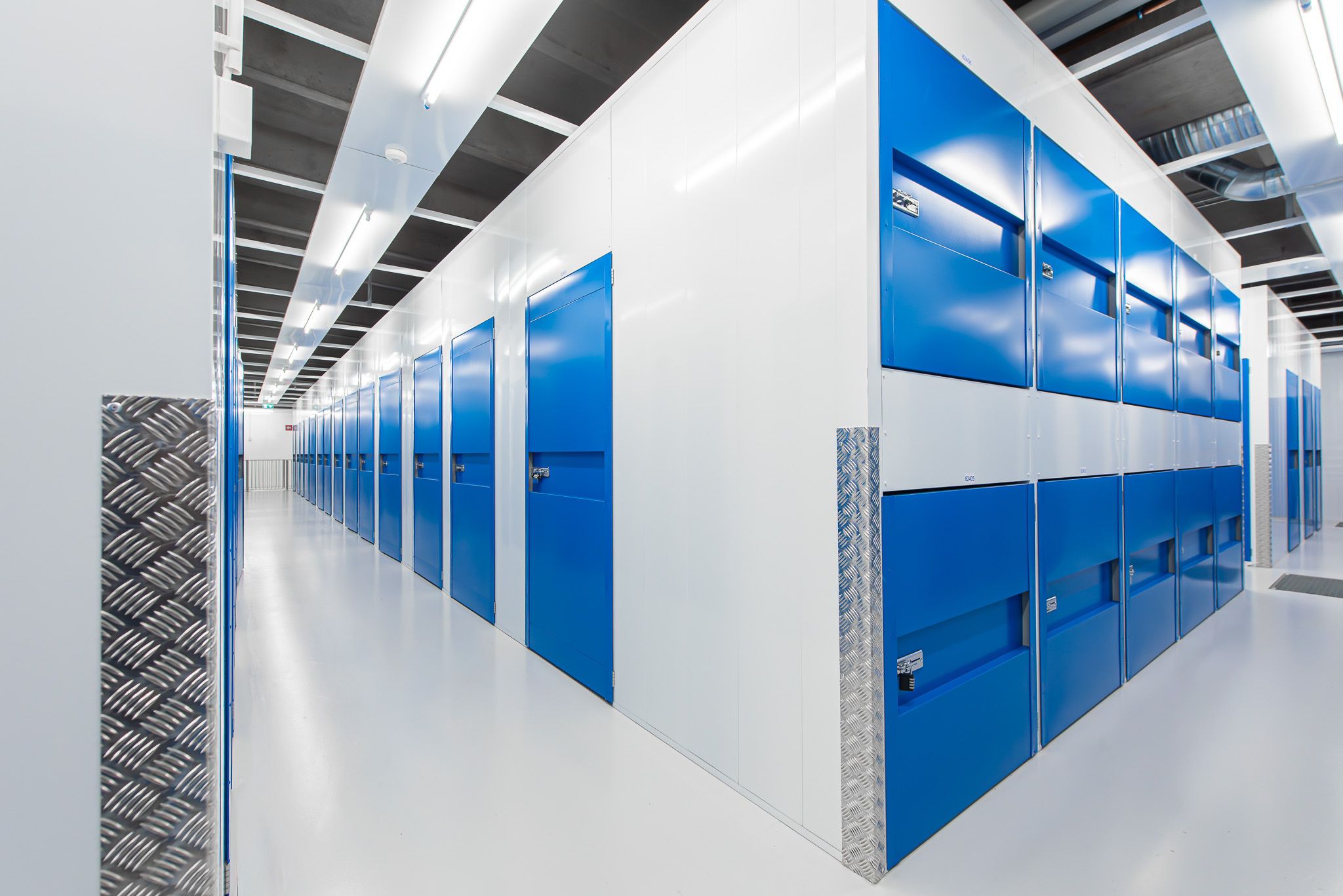
Start by mapping demand in the area you’re considering: population density, the share of residents living in flats without storage or a basement, competitors in the area, and how traffic flows past the site. Self-storage doesn’t need to be located in the city centre. In fact, it’s often smarter to choose a site slightly further out, with lower rent than prime retail space, since the business doesn’t depend on passing footfall the way a shop does.
In practice, you have three ways in:
Self-storage is a commercial activity, which means the Planning and Building Act (plan- ogbygningsloven) and local zoning plans set the framework. Things worth clarifying early:
Self-storage facilities often face strict requirements for fire compartments, escape routes, and fire alarms and the more floors or mezzanines you plan, the stricter these get.
Fire safety is perhaps the area where it pays off most to choose suppliers who can document their solutions against European standards and defined fire ratings. That makes the approval process with the municipality considerably easier.
This is where most founders spend the most time, and for good reason: it’s the actual foundation for how well the facility performs for years to come. A supplier that works specifically with self storage systems, such as Norway’s own S4S Nordic, gives a good picture of what a modern facility typically consists of.
Partition walls and corridor walls are the skeleton of the facility. Units are built up using partition panels, typically Aluzinc-coated steel, adjustable in height from around 2.1 to 3 metres, while corridor walls define the traffic routes and give the facility a clean, trustworthy feel.
Roller doors are space-efficient because they roll up into the ceiling, and come in widths from around 1.2 to 2.5 metres, with manual or electronic locking. Swing doors offer a slightly different user experience and often suit smaller units better. Both are typically available in several standard colours, so you can colour the facility to match your own brand.
Mesh panels or security grilles are typically installed above units where the ceiling height exceeds the unit height, preventing unauthorised access between units without blocking out light and air. Kick plates, corner guards, and aluminium wall protectors are cheap insurance against damage from trolley traffic, and extend the facility’s lifespan more than most people realise.
LED lighting with motion sensors can cut electricity consumption by up to 80% compared to traditional lighting, and has in practice become standard in new facilities. Slip-resistant plastic tiles are worth considering as a flooring solution, particularly when renovating existing buildings. They withstand heavy loads, resist moisture and mould and are recyclable.
The choice is between manual (padlock, cylinder lock, or disc lock — affordable and reliable) and electronic (PIN code, key card, or mobile app via Wi-Fi or Bluetooth). Electronic locks provide a better customer experience and make unmanned operation possible, but work best when integrated directly with your booking system.
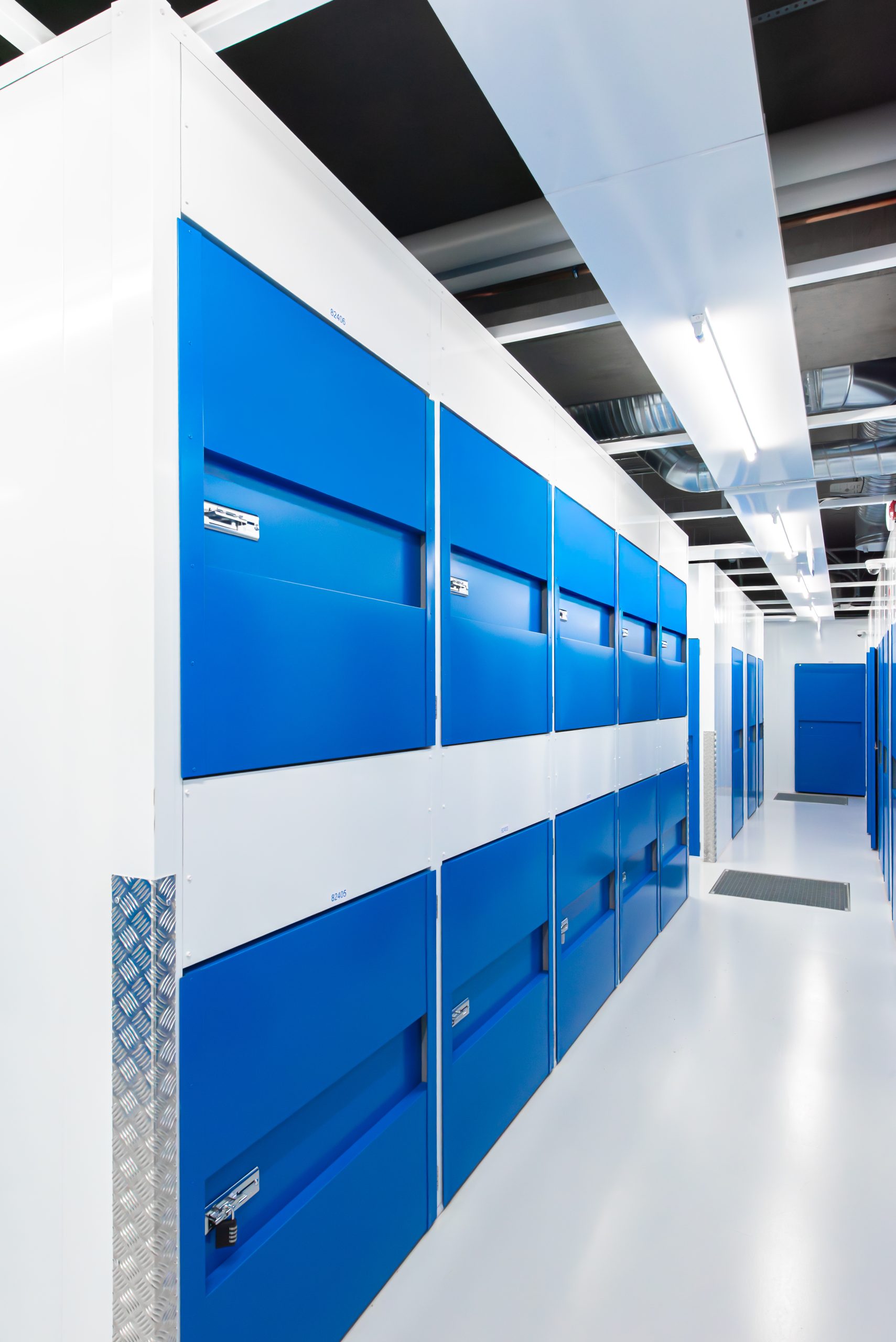
If the building has good ceiling height, it’s worth looking at a mezzanine. A mezzanine can nearly double the number of rentable units on the same floor area, and comes in various fire ratings, typically R0, R30, and R60, depending on requirements. Combined with fixed or movable stairs, this also keeps the number of escape routes — and therefore costs — down.
Look for suppliers who can handle the entire process, from design and manufacturing through to installation, rather than assembling individual components yourself. S4S Nordic is one example of a supplier that designs for Nordic conditions, manufactures in Europe, and installs across the Nordics, with around a 10-year warranty on its products. The advantage of that kind of full service delivery is that fire classification, material quality, and installation form one documented system, which makes the approval process with the municipality and insurance company considerably easier than if you were to piece it together yourself.
Ask suppliers specifically about lead times, reference projects, and whether they can document fire rating and material quality. Sustainability has also become a genuine competitive factor in the industry, as more suppliers now use recyclable steel and flooring materials.
Profitability essentially comes down to three numbers: construction cost per square metre, achievable rent per square metre, and how many units are actually rented out at any given time. Some practical advice before you build your budget:
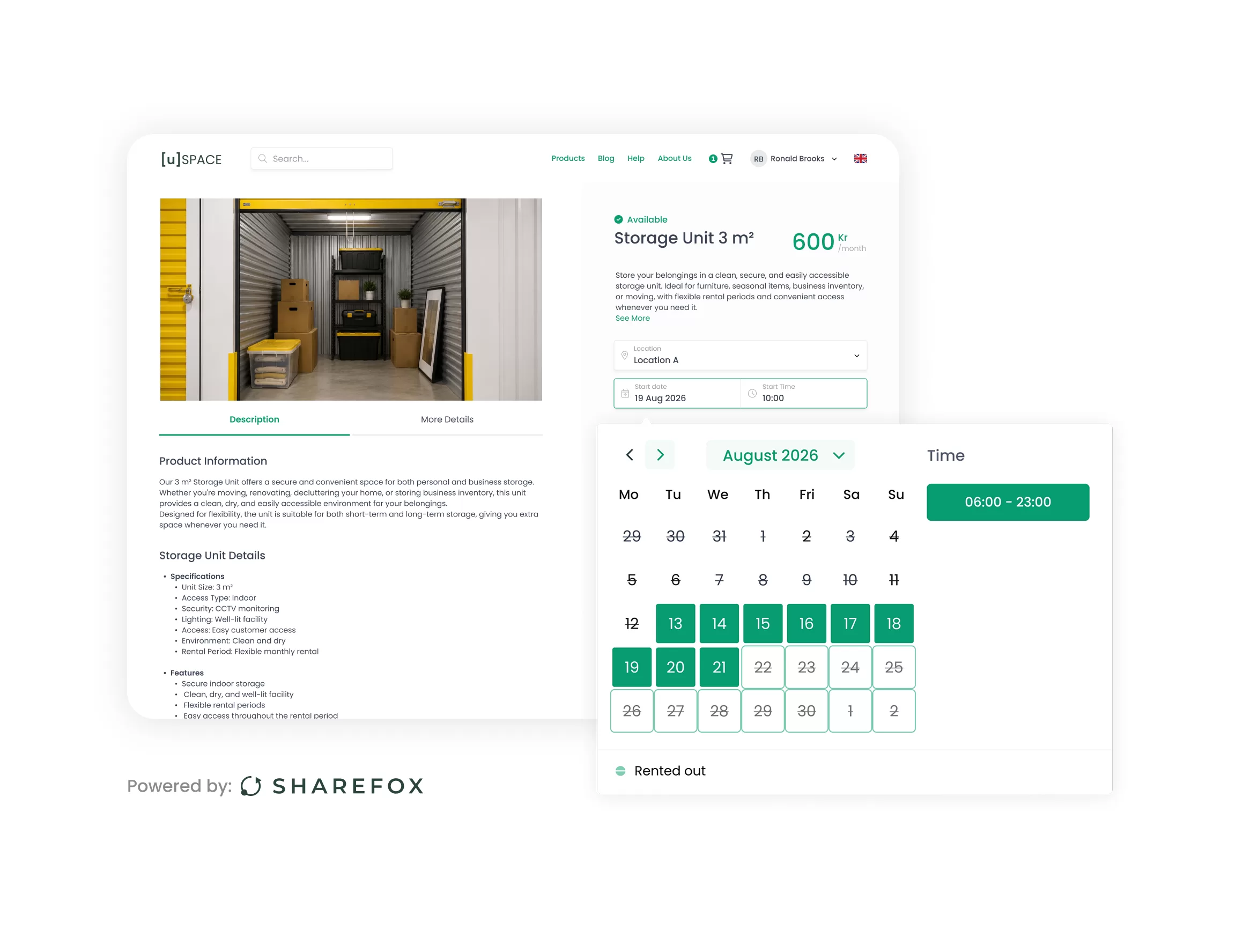
This is perhaps where the biggest difference lies between a facility that runs itself and one that requires you tobe on-site constantly. In a modern self-storage facility, customers book and pay for units online, get digital access via app or code, and administration is handled by self-storage management software that takes care of invoicing, reminders, and access control in the background. The better the physical solution — meaning locks and digital access — works together with the management software, the less on-site staffing you need. For small and mid sized facilities, this is often what determines whether the numbers actually add up.
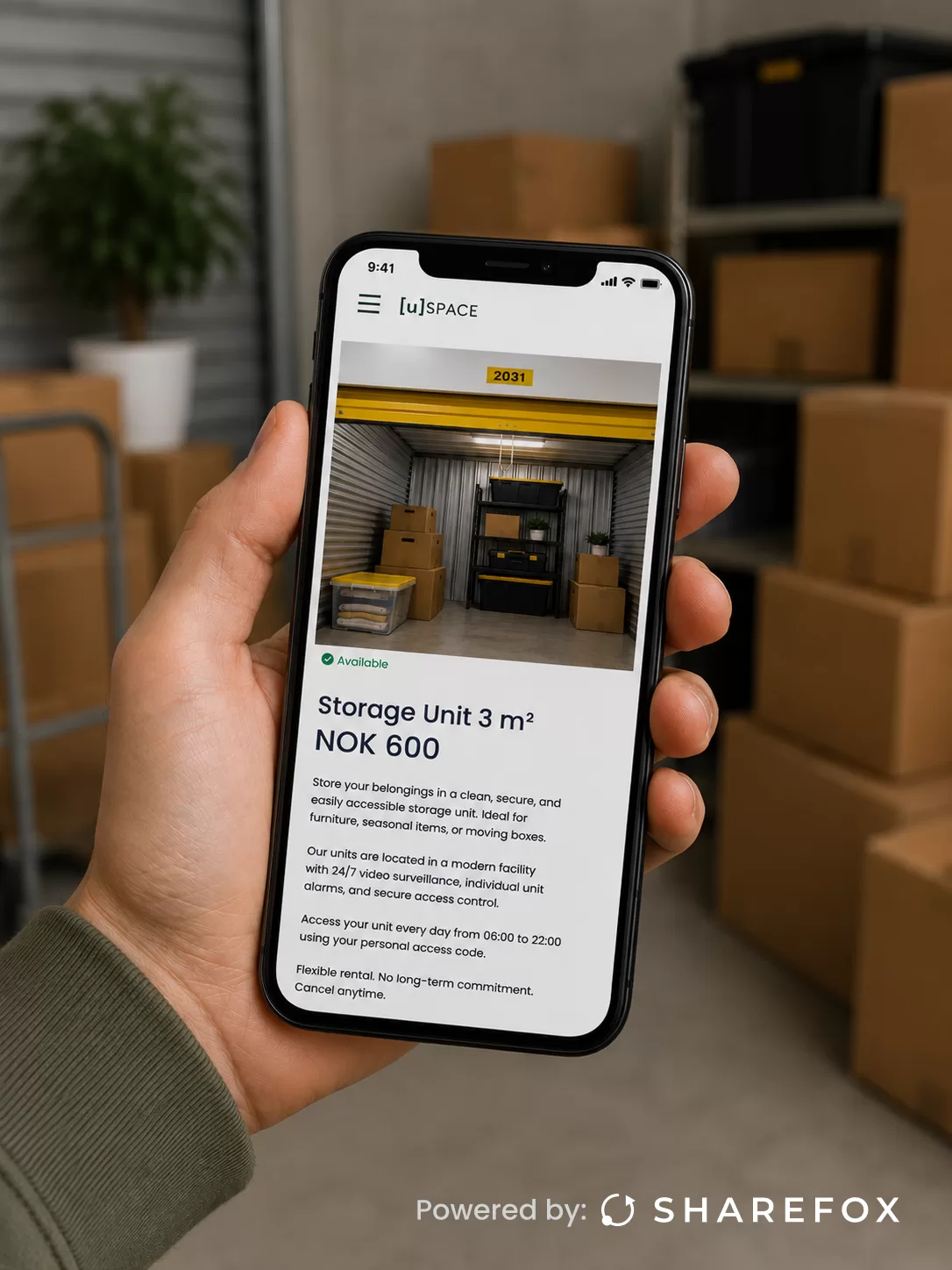
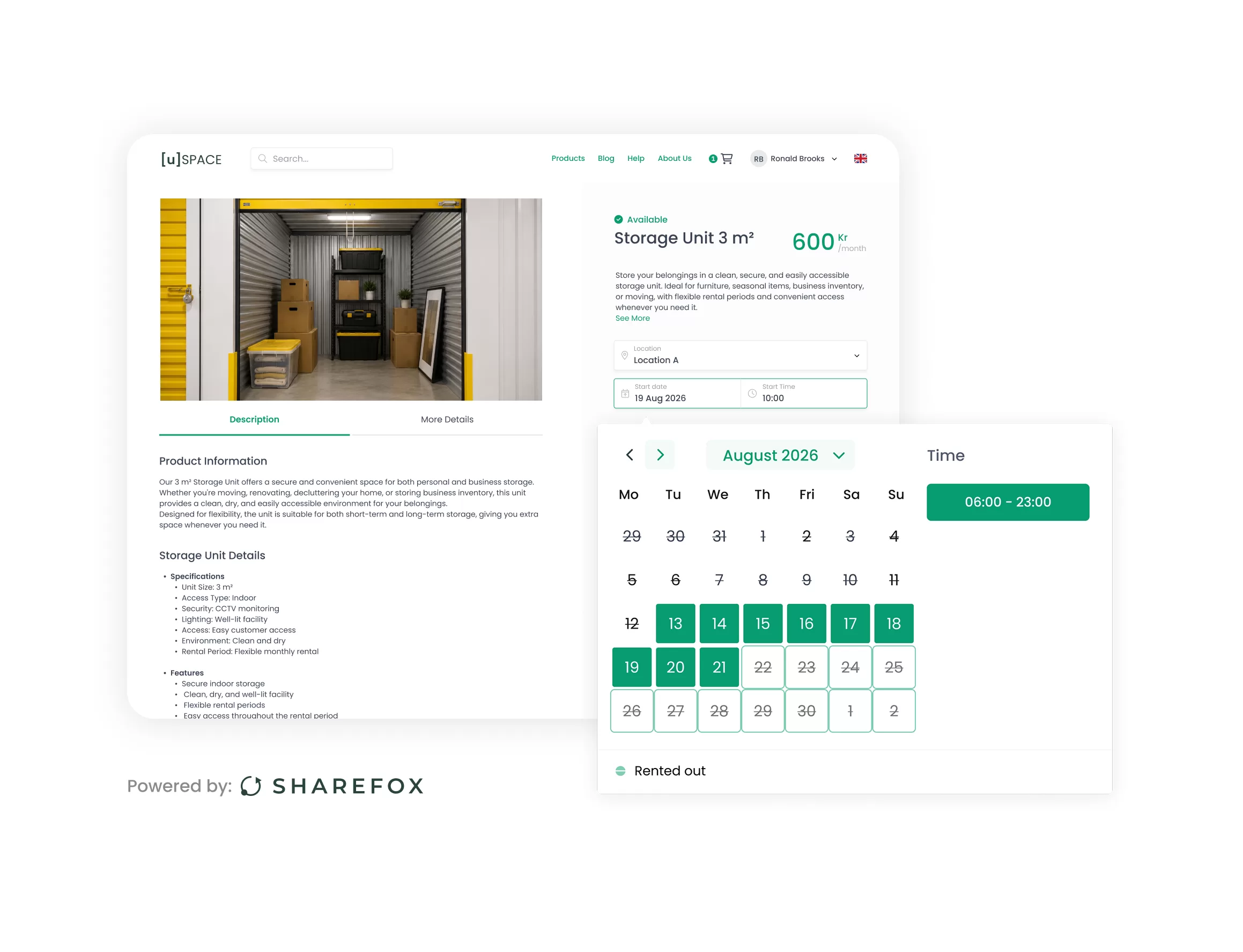
Sharefox Self-Storage Software brings booking, invoicing, payment, and access control together in a single platform, so customers can reserve and pay for a unit themselves, while you as the operator get full visibility into occupancy, revenue, and follow-up — without needing to be physically present. Whether you’re running several facilities or want low staffing from day one, this is the kind of system that lets the business grow without operating costs growing just as fast.
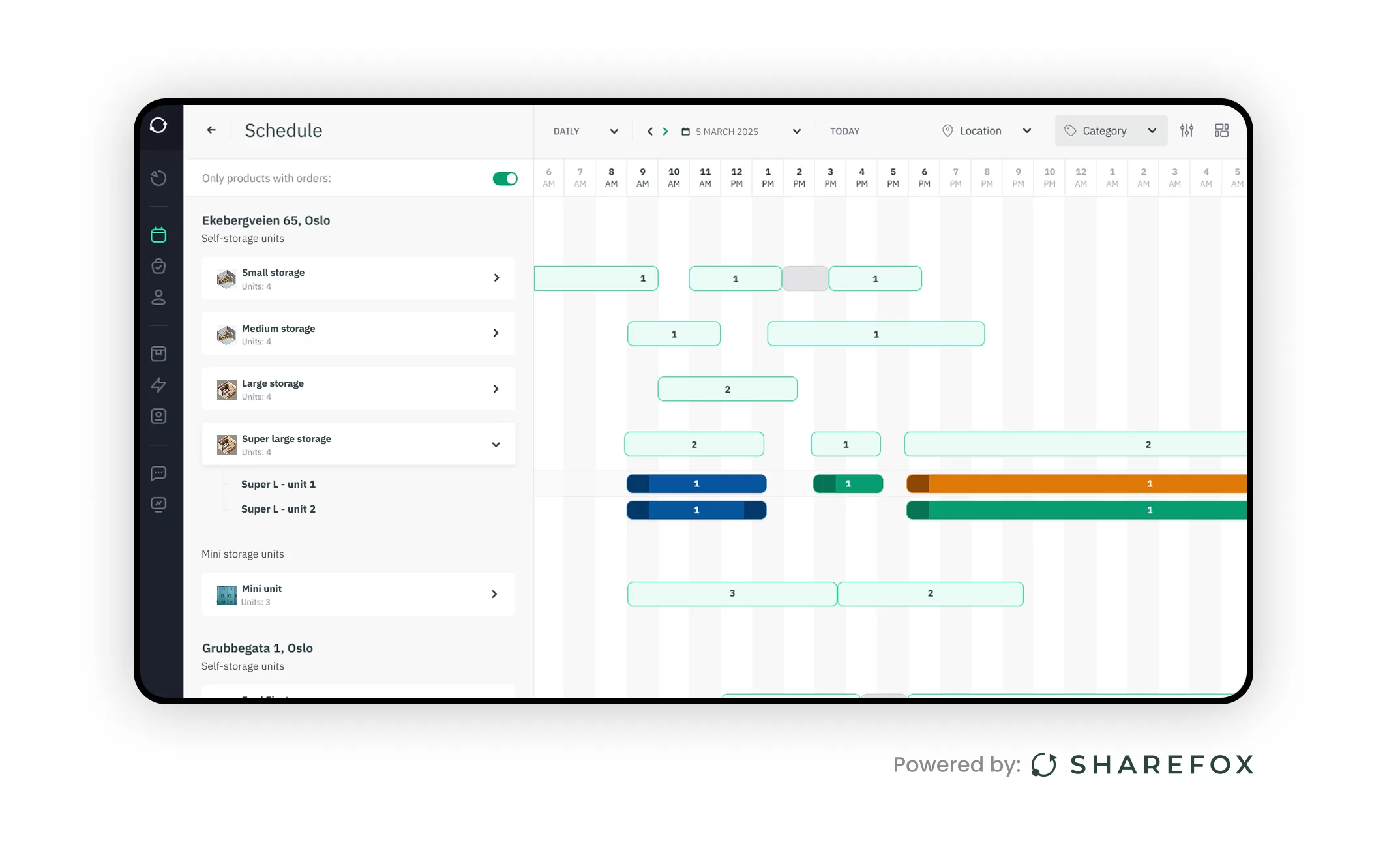
Several self-storage operators in the Nordics have already taken this step. Lager247 in Norway has brought together booking, recurring payment collection, and automated access control in a single solution with Sharefox. Managing director Morten Aanesen describes it this way: “the operation practically runs itself.”
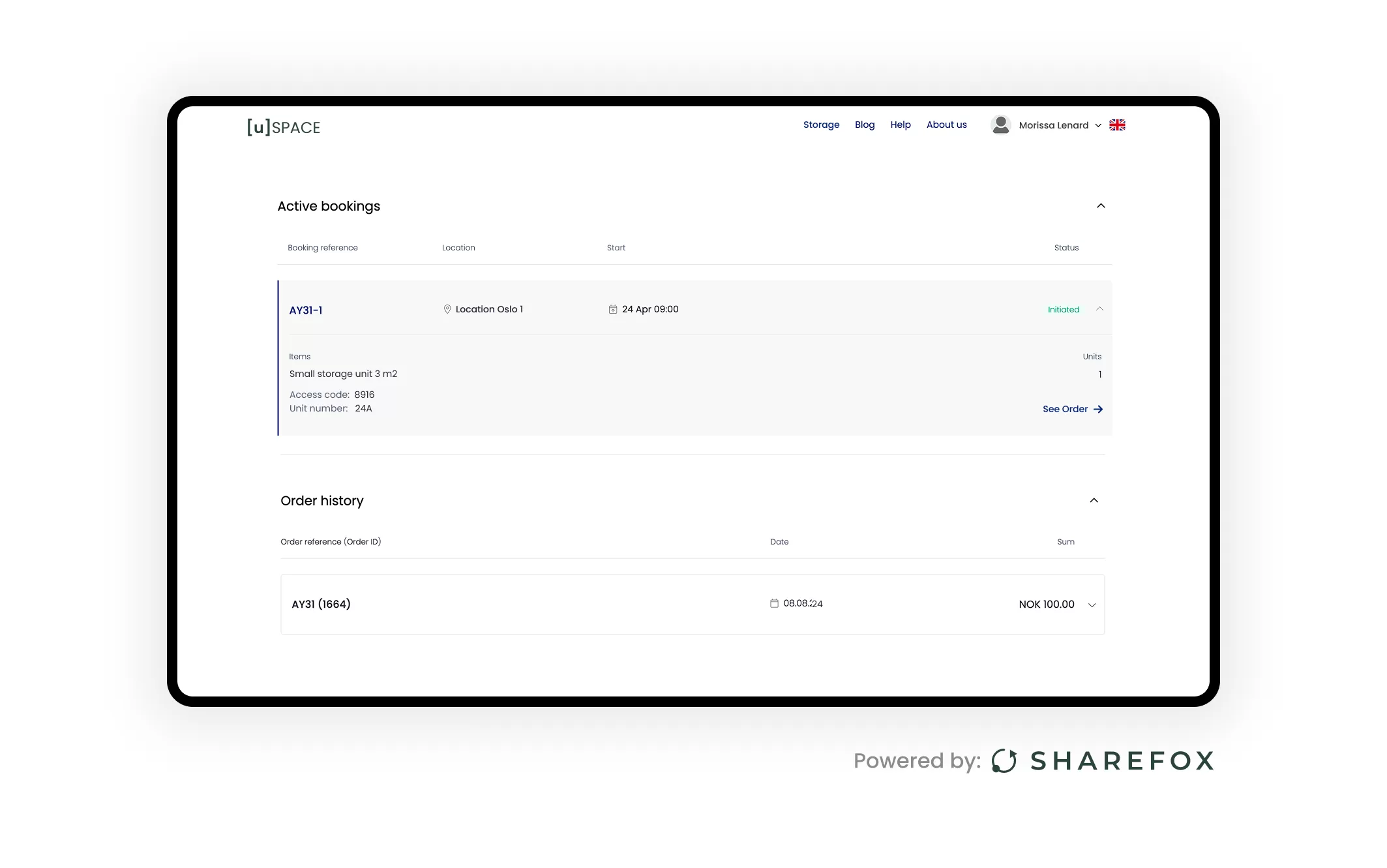
Operators such as Lagerboxen, LagerboxFyn, and Opbevaring.nu have made similar moves, illustrating the same point: solid self-storage management software isn’t an add-on — it’s just as critical to profitability as the physical solution itself.
To succeed with self-storage, location, regulations, physical solution, and management software all need to work together. None of these alone carries the project. If you’ve chosen a site and have a specific building in mind, the natural next step is to gather quotes from suppliers for the facility itself, and put together a plan for how operations will work digitally from the very first tenant.
1. What does it cost to start a self-storage facility?
Cost depends on the site, building type, and chosen physical solution, but the three largest line items are typically the site or building lease, the self-storage system itself (walls, doors, locks, lighting), and any mezzanine. Converting an existing building is generally cheaper than new construction.
2. Do I need a building permit to start a self-storage business?
Yes. Self-storage counts as commercial activity and requires a building application, in addition to the site being zoned for the purpose. Fire requirements are often the most demanding part of the approval process.
3. How long does it take before a self-storage facility becomes profitable?
Occupancy typically builds up gradually over 12 to 24 months after opening, depending on location and marketing.
4. Do I need dedicated self-storage management software?
Yes, in practice. Self-storage management software that handles booking, payment, and digital access control significantly reduces staffing needs and is often decisive for whether operations are profitable, especially for small and mid-sized facilities.